God Our Mother

Mother Nature.jpg

“This is my body, take and eat.”

God Our Mother
A Poem by Allison Woodard

To be a Mother is to suffer;
To travail in the dark,
stretched and torn,
exposed in half-naked humiliation,
subjected to indignities
for the sake of new life.

To be a Mother is to say,
“This is my body, broken for you,”
And, in the next instant, in response to the created’s primal hunger,
“This is my body, take and eat.”

To be a Mother is to self-empty,
To neither slumber nor sleep,
so attuned You are to cries in the night—
Offering the comfort of Yourself,
and assurances of “I’m here.”

To be a Mother is to weep
over the fighting and exclusions and wounds
your children inflict on one another;
To long for reconciliation and brotherly love
and—when all is said and done—
To gather all parties, the offender and the offended,
into the folds of your embrace
and to whisper in their ears
that they are Beloved.

To be a mother is to be vulnerable—
To be misunderstood,
Railed against,
Blamed
For the heartaches of the bewildered children
who don’t know where else to cast
the angst they feel
over their own existence
in this perplexing universe

To be a mother is to hoist onto your hips those on whom your image is imprinted,
bearing the burden of their weight,
rejoicing in their returned affection,
delighting in their wonder,
bleeding in the presence of their pain.

To be a mother is to be accused of sentimentality one moment,
And injustice the next.
To be the Receiver of endless demands,
Absorber of perpetual complaints,
Reckoner of bottomless needs.

To be a mother is to be an artist;
A keeper of memories past,
Weaver of stories untold,
Visionary of lives looming ahead.

To be a mother is to be the first voice listened to,
And the first disregarded;
To be a Mender of broken creations,
And Comforter of the distraught children
whose hands wrought them.

To be a mother is to be a Touchstone
and the Source,
Bestower of names,
Influencer of identities;
Life giver,
Life shaper,
Empath,
Healer,
and
Original Love.

The betrayal

“Friend, do what you came for”

Life betrays itself every day, all the time in order to continue.  For life to evolve in a forward motion, it must betray itself.

Your DNA has a built-in capacity and necessity for error.  Error that most of the time is meaningless, but every so often is a betrayal of life.  Error that can cause the failure of life to spring forth.  Error that can cause death.

And yet, without this inherent betrayal, life becomes static and cannot grow, change or evolve. 

Life betrays itself so that it can exist. 

What is betraying you today? Your friend? Your employer? Your family member? Your body? Your mind? 

“Behold, the hand of him who betrays me is with me at the table.”

To comment, click on the header of this post “The betrayal”


Life is in the question

question.jpg

Life is found in the question

Lately I’ve been in quite a few discussions where young parents ask:

“what should I teach my kids?”

“what answer do I give my kids about god?”

But, life is in the question, not in the answer. Whether we are looking for the answers for ourselves, or for our kids, life is not found there. Life is found in the question. So, rather than asking what answer to give your kids, ask:

“what questions should I give my kids?”

“Seek and you will find, knock and door will be opened”

Womb

black womb.jpg

Waiting and resting is hard.

In the Hebrew Bible one of the words that is used for Mercy is “Rachamim,” which comes from the root word “rechem,” or womb.

I love this word connection.  The womb is a place of darkness, a place of formation, a place in which we really know nothing but are simply being held and suspended as we wait for birth. 

So many times in life, we have no idea what to do, we are in the dark, suspended, without form and void. These are times when we feel lost, helpless, and out of control.  It is often at these times that we feel compelled to cry out to god, or to something, asking for guidance, illumination or rebirth.   It’s as though god, or the universe, or whatever you call it, has opened up a space for us – a dark space to be sure – but a space all the same.  So often, it’s in these spaces that we are created.   My darkest times are the times in which the most creative things occurred for me.  They are the times in which I was reborn. 

As we wait in these dark spaces for illumination or rebirth, we are in the space, the “womb” of mercy. All we can do simply float along as we are being held and suspended -- as we wait for the birth of what’s next.  Here we are helpless, and are able to simply receive mercy because we have nothing else to bring to the situation.  We are without resources.  We are poor in spirit.  We have thrown our hands up in despair. There is nothing we can do but wait.  Waiting and resting is hard.

Blog image is: "Black Womb" by Piotr Ruszkowski. "

To comment on this post, click on the header “Womb”

The best self care list ever

153741287-cats-meticulous-nature-632x475.jpg

Did you eat a vegetable?

I have found that over the years, I’ve learned more from my kids than probably any other thing in life. They are smart, creative, deep-thinkers, and funny!

My oldest daughter has always been wise. Her name even means “Small wise one”. (She’s small too!)

Recently, she was going through a super stressful time at work. Her anxiety was kicking her butt. She wrote this self-care list and shared it with me. I think it’s one of the purest, best self-care lists of all time (plus I’m featured in it, so that’s a bonus !)

I thought I’d share it here - enjoy:


Have you stretched?

Did you eat a vegetable?

Do you have water?

Did you sit in the sun?

Have you taken 5 deep breaths?

Have you looked forward to the light at the end of the tunnel?

Have you called your mom?

Have you called your brother?

Have you asked for help?

Have you let your partner know your emotional and logistical wants?

Have you admitted your emotional needs to the people around you/are you standing up for yourself?

Did you take a nap?

Have you taken a bath/done a face mask/cared for your body in a comforting way?

Have you read?

Have you cared for someone else?

Have you checked in with your whole self and asked what you need?

If you’ve done all of it and it doesn’t work - refer back to calling your mom.


To comment on this post, click on the header “The best self care list ever”


Thinking about self care

CatGrooming-02.png

I realized that they had not cared for me and my feelings in that situation because they cannot. They do not even care for themselves.

I recently led a short meditation experience.  We did a loving kindness meditation using the breath.  I’ve added the outline of the practice below.

What I wanted to share about was my experience during the meditation.   As I directed the meditation toward myself, I felt an inability to connect to the intentions of joy and self-care.   I breathed with it, sat with it, and just-could-not.

When I directed the meditation toward someone that I was upset with, I found a connection.  When I got to “may they care for themselves,” I remembered that they do not and felt a connection between the block in myself and my intention toward them. 

The back story was that I was upset with this person because they had done something in their own self-interest that they knew would upset me.   This was a person who I always considered had my best interest at heart.  Someone who I considered to be one of my “champions” in life and who would protect me.  And yet, when it came to something they wanted – they chose their own interests over my feelings.   It was a loss.  A disillusionment. 

In my meditation, I realized that they had not cared for me and my feelings in that situation because they cannot.  They do not even care for themselves.   

It has helped me to let it go. 

It has helped me to realize in a new way just how important self-care is.  


Loving-Kindness Meditation Practice Instructions

 To practice loving-kindness meditation, sit in a comfortable and relaxed manner. Take two or three deep breaths with slow, long and complete exhalations. Let go of any concerns or preoccupations. For a few minutes, feel or imagine the breath moving through the center of your chest - in the area of your heart.

Lovingkindness is first practiced toward oneself, since we often have difficulty loving others without first loving ourselves. Sitting quietly, mentally repeat, slowly and steadily following the rhythm of your breath, the following or similar phrases:

 May I have joy, may I be content, may I be peaceful and at ease, may I be whole, may I care for myself.

 While you say these phrases, allow yourself to sink into the intentions they express. Loving-kindness meditation consists primarily of connecting to the intention of wishing ourselves or others happiness. However, if feelings of warmth, friendliness, or love arise in the body or mind, connect to them, allowing them to grow as you repeat the phrases. As an aid to the meditation, you might hold an image of yourself in your mind's eye. This helps reinforce the intentions expressed in the phrases.

 After a period of directing loving-kindness toward yourself, bring to mind a friend or someone in your life who has deeply cared for you. Then slowly repeat phrases of loving-kindness toward them:

 May you have joy, may you be content, may you be peaceful and at ease, may you be whole, may you care for yourself.

 As you say these phrases, again sink into their intention or heartfelt meaning. And, if any feelings of loving-kindness arise, connect the feelings with the phrases so that the feelings may become stronger as you repeat the words.

 As you continue the meditation, you can bring to mind other friends, neighbors, acquaintances, strangers, animals, our planet and finally, when you are ready, people with whom you have difficulty. You can either use the same phrases, repeating them again and again, or make up phrases that better represent the loving-kindness you feel toward these beings.

 One variation on the lovingkindness meditation is to simply repeat the phrase “I am lovingkindness” or “I am loving awareness” over and over with the rhythm of your breath. 

 If you find the mind wandering or you find yourself struggling at a certain point, just as in the cultivation of any type of mindfulness, simply notice what’s going on in the mind. Then, simply, return to your breath and include yourself and your wandering mind into the field of loving-kindness.  Come back to your breath and the phrases resting in the feeling radiating out of those phrases, and underneath that, out of your heart.

 Sometimes during loving-kindness meditation, seemingly opposite feelings such as anger, grief, or sadness may arise. Take these to be signs that your heart is softening, revealing what is held there. You can either shift to mindfulness practice or you can—with whatever patience, acceptance, and kindness you can muster for such feelings—direct loving-kindness toward them. Above all, remember that there is no need to judge yourself for having these feelings.

 Adapted from teachings by Steven Smith, Jon Kabat-Zinn’s Guided Mindfulness Meditation Series 3 and "The Issue at Hand" by Gil Fronsdal.


To comment on this post, click on the header “Thinking about Self Care”


The Universe

universe.jpg

The universe informs the actions of all its parts,
And their feedback alters the universal flow


“A single, unbroken entity
in flowing motion
in which each part
replicates the whole.
The three basic manifestations of this entity are:
Matter
Energy
Meaning
And each enfolds the other two.

The universe informs the actions of all its parts,
And their feedback alters the universal flow.”

(David Bohm’s proposed understanding of the universe)

David Joseph Bohm (December 20, 1917 – October 27, 1992) was an American scientist who has been described as one of the most significant theoretical physicists of the 20th century and who contributed unorthodox ideas to quantum theory, neuropsychology, and the philosophy of the mind.

To comment on this post, click on the post title, “The Universe”


Visions

vision1.jpg

After a few days… Christ was hidden again

I love mystics. I just got back from Richard Rohr’s conference in Albuquerque on the “Universal Christ” . He opens his book with a vision that the mystic Caryll Houselander had in which she suddenly saw Christ in everyone.

I looked up Caryll Houselander and read that this was not her only vision, but that the gist of all her visions was the same - Christ in everyone. As a young girl, she had her first vision in a convent. One day, she entered a room and saw a  Bavarian nun sitting by herself, weeping and polishing shoes ( I wonder how she knew the nun was Bavarian?). This was during a time when there was much anti-German prejudice. As she stared, she saw the nun's head being pressed down by a crown of thorns and she interpreted this as Christ's suffering in the woman.

Later, in July 1918, Houselander was sent by her mother on an errand. On her way to the street vendor, she looked up and saw what she later described as a huge Russian-style icon spread across the sky. The icon was of Christ crucified, lifted up and looking down, brooding over the world. Shortly after, she read in a newspaper an article about the assassination of Russian Tsar Nicholas II. She said the face she saw in the newspaper photograph was the face in her vision of the crucified Christ.

And then, her third vision (the one Richard Rohr wrote about) occurred when she was on a busy underground train:

“I was in an underground train, a crowded train in which all sorts of people jostled together, sitting and strap-hanging - workers of every description going home at the end of the day. Quite suddenly I saw in my mind, but as vividly as a wonderful picture. Christ in them all. But I saw more than that; not only was Christ in every one of them, living in them, dying in them, rejoicing in them, sorrowing in them, but because He was i them, and because they were here, the whole world was here too, here in the underground train; not only the world as it was at that moment, not only all the people in all the countries of the world, but all those people who had lived in the past, and all those yet to come.

I came out into the street and walked for a long time in the crowds. It was the same here, on every side, in every passer-by, everywhere - Christ.

I had long been haunted by the Russian Conception of the humiliated Christ, the lame Christ limping through Russia, begging His bread; the Christ who, all through the ages, might return to the earth and come even to sinners to win their compassion by His need. Now, in the flash of a second, I knew that this dream is a fact; not a dream, not the fantasy or legend of a devout people, not the prerogative of the Russians, but Christ in man….

I saw too the reverence that everyone must have for a sinner; instead of condoning his sin, which is in reality his utmost sorrow, one must comfort Christ who is suffering in him. And this reverence must be paid even to those sinners whose souls seem to be dead, because it is Christ, who is the life of the soul, who is dead in them; they are His tombs, and Christ in the tomb is potentially the risen Christ….

Christ is everywhere; in Him every kind of life has a meaning and has an influence of every other kind of life. It is not the foolish sinner like myself, running about the world with reprobates and feeling magnanimous, who comes closest to them and brings them healing; it is the contemplative in her cell who has never set eyes on them, bu tin whom Christ fasts and prays for them - or it may be a charwoman in whom Christ makes Himself and servant again, or a king whose crown of gold hides a crown of thorns. Realization of our oneness in Christ is the only cure for human loneliness. For me, too, it is the only ultimate meaning of life, the only thing that gives meaning and purpose to every life.

After a few days the “vision” faded. People looked the same again, there was no longer the same shock of insight for me each time I was face to face with another human being, Christ was hidden again; indeed, through the year to come I would have to seek for Him, and usually I would find Him in others - and still more in myself - only through a deliberate and blind act of faith”

The three mystical experiences she claimed to have experienced convinced her that Christ is to be found in all people, even those whom the world shunned because they did not conform to certain standards of piety. She would write that if people looked for Christ in only the "saints," they would not find him. She is described as having smoked, drank, and had a sharp tongue.

At the conference, I was speaking to a man about the stories in the New Testament that describe people’s encounters with Christ after the resurrection. Mary thinks Jesus is the gardener. The disciples on the road to Emmaeus don’t recognize him. Haven’t you always wondered about that? How could they not have recognized him? I mean, if someone I loved died and came back and appeared to me, I would recognize them! I have often dismissed this part of the story - or more accurately ignored it because it was baffling - and thought, “well, maybe his resurrected body looked super different.” Even though I knew this was a lame explanation.

But what IF:

It WAS the gardener.

It WAS another dude on the road to Emmaeus.

And it WAS Christ in those people. Just like Caryll Houselander’s vision?

“Then their eyes were opened and they recognized him, and he disappeared from their sight.” Luke 24:31

To comment, click on the header of this post, “Visions”

The Enemy

enemy.jpg

If we loved our enemies, then enemies would cease to exist.

We like to create enemies.

The ego is that part of our consciousness that when we were tiny infants, forms and informs us that we are a separate self – no longer a part of our mother, but US.  

This separation is necessary and healthy to developing an identity, but as we mature, we find that, like most things, there are pros and cons wrapped up in the ego.    

Eckart Tolle says that the ego is the part of our mind that needs an enemy to survive. 

“The content of the ego varies from person to person, but in every ego the same structure operates. In other words: Egos only differ on the surface. Deep down they are all the same. In what way are they the same? They live on identification and separation.

When you live through the mind-made-self comprised of thought and emotion that is the ego, the basis for your identity is precarious because thought and emotion are by their very nature ephemeral, fleeting. So, every ego is continuously struggling for survival, trying to protect and enlarge itself. To uphold the I-thought, it needs the opposite thought of “the other.” The others are most other when I see them as my enemies. At one end of the scale of this unconscious egoic pattern lies the egoic compulsive habit of faultfinding and complaining about others. Jesus referred to it when he said, “Why do you see the speck that is in your brother’s eye, but do not notice the log that is in your own eye?”   -Tolle

I’ve been in some conversations with friends recently where talk of “the enemy” came up.   In religious-speak, I hear this a lot.  Something bad happens, and it’s the “enemy”.   These friends had stepped out into a new realm spiritually recently and had started to explore spiritual places they’d never been before and give forms of healing to the world that they’d never given before.  Two got quite sick and one had very stressful issues arise in her family.  All three interpreted this as Satan (the enemy) trying to block their endeavors. 

It’s not just religious folk who use this frame.  We all do.   In our lives, we are just going along our merry way, relatively satisfied and something happens to upset our apple cart.  Maybe it’s something we initiated (as with my friends and their new spiritual endeavors), maybe it’s some tragedy or loss that befalls us.  Whatever the case, our sense of self is threatened, we lose our bearings, the rug is ripped out from under us. 

Our ego, in an attempt to recover our sense of self, will want to create an enemy to fight against, rather than allow some part of us to die so that something new can be reborn.    

Consciousness is like a deep, wide, swift-flowing river. On the surface many things are happening and there are many reflections; but that is obviously not the whole river. The river is a total thing, it includes what is below as well as what is above. It is the same with consciousness; but very few of us know what is taking place below. Most of us are satisfied if we can live fairly well, with some security and a little happiness on the surface. As long as we have a little food and shelter, a little puja, little gods and little joys, our playing around on the surface is good enough for us. Because we are so easily satisfied, we never inquire into the depths; and perhaps the depths are stronger, more powerful, more urgent in their demands than what is happening on top. So there is a contradiction between what is transpiring on the surface, and what is going on below. Most of us are aware of this contradiction only when there is a crisis, because the surface mind has so completely adjusted itself to the environment.

– Krishnamurti

 In our attempts to maintain our equilibrium, what enemies are created? 

Satan? 

The person who hurt us? 

God? 

Or perhaps we make an enemy of ourselves and become self-destructive through addiction.  For some, life itself becomes the enemy and depression sets in. 

It’s easy to get stuck in a cycle of fighting against one enemy after another.  In religion, we pray, we enact “faith” in an attempt to overcome doubt, sickness, sadness or grief.  Outside of religion, we may fight the enemy of loneliness with relationships (of many kinds).  We may fight the enemy of sadness with drugs, alcohol, recreation.  We may fight the enemy of boredom with entertainment, shopping, travel.   

Maybe you have your own set of enemies and weapons you use to fight them.

What if we actually LOVED our enemies? 

If we loved our enemies, then enemies would cease to exist.

What if there were no enemy? 

What if the thing you have placed in the role of enemy could be seen as a friend? 

In other words, what if my friends, rather than rejecting their sickness and stress, saw it as a friend that was arising from their depths as a teacher?  They had embarked on a spiritual quest, and had hoped to deepen themselves, and yet when two very powerful teachers – the body and relationships – spoke up and said, “here!  Pay attention here!  There is pain here and if you listen to it, it will teach you something profound and life giving,” they shut it up and shut it down.  

Once we decide that something or someone is the enemy, we don’t have to listen to him.  We don’t have to respect, embrace, learn from or welcome her in. 

You are nothing. You may have your name and title, your property and bank account, you may have power and be famous; but in spite of all these safeguards, you are as nothing. You may be totally unaware of this emptiness, this nothingness, or you may simply not want to be aware of it; but it is there, do what you will to avoid it. You may try to escape from it in devious ways, through personal or collective violence, through individual or collective worship, through knowledge or amusement; but whether you are asleep or awake, it is always there. You can come upon your relationship to this nothingness and its fear only by being choicelessly aware of the escapes. You are not related to it as a separate, individual entity; you are not the observer watching it; without you, the thinker, the observer, it is not. You and nothingness are one; you and nothingness are a joint phenomenon, not two separate processes. If you, the thinker, are afraid of it and approach it as something contrary and opposed to you, then any action you may take towards it must inevitably lead to illusion and so to further conflict and misery. When there is the discovery, the experiencing of that nothingness as you, then fear—which exists only when the thinker is separate from his thoughts and so tries to establish a relationship with them—completely drops away.

– Krishnamurti

https://www.youtube.com/watch?v=tFGs7HP15d4


To comment, click on the header of this post, “The Enemy”
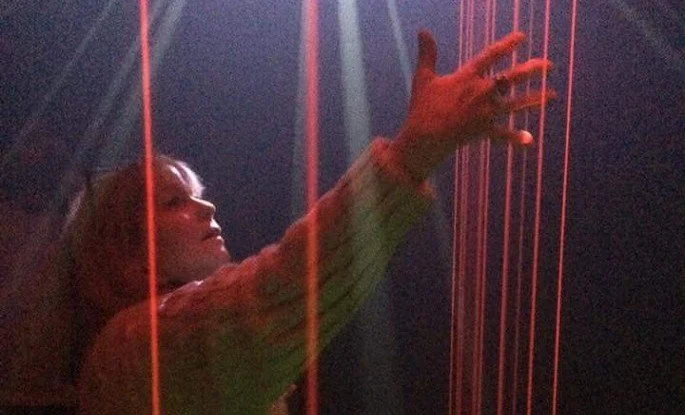


Mirror Mirror

mirrormirror2.jpg

life is created from death and decay, pain and suffering, every bit as much as from love

I was talking to my daughter the other day about relationships.  Marriage in particular.  In the conversation we were talking about how marriage, maybe more than any other relationship we have, is the one that holds a mirror up to us.  It shows us who we are and what we are made of.  It exposes our ego and attachments in ways that nothing else ever does.  It forces us to ask the really, really hard questions of ourselves and of life

If we let it.

That’s why it’s so hard.  That’s why it’s transformational.  That’s why it’s so sacred. 

I used to define sacred in terms of something pure, so for marriage to be sacred it had to be pure and undefiled. 

But as I’ve gotten older, I’ve come to feel that everything is sacred and that there is no clear dividing line between pure and impure, sacred and secular, clean and unclean.    

Perhaps I could say that the sacred is that which brings forth life.  And life is created from death and decay, pain and suffering, every bit as much as from love.   It is sacred that death can be transformed into life in this way.   

In relationships, we can fake it with people we don’t live with.  We can fake it with our kids.  We can fake it with our co-workers.  We can even fake it with ourselves.  

But it’s pretty hard to fake it for any real length of time with our spouse. 

Sooner or later, the truth will out and likely as not, our spouse will react in that transformational, mirror-mirror-on-the-wall way that we all hate so much.  Pointing out to us what we are doing, provoking the very ugliest parts of us to burst forth, pulling out our deepest fears of abandonment and rejection.  It feels awful.  It can feel like a death of sorts. 

So, we avoid showing up with real truth and inviting real truth in relationships with the “if I don’t say anything, maybe he/she won’t say anything either” game.  We shut down those we are relationships with by blaming them and making our feelings and unhappinesses their fault.  We spray flat, black paint on the mirror, or we avoid relationships altogether. 

Transformation only occurs when something dies and something new is reborn and death isn’t easy.  Most of us fight against it with everything we have.  Most of us let go of our agendas in life kicking and screaming when life rips them out of our death grip.  Maybe that’s why they call it a death grip.  We are fighting with all our strength against the death of something. 

Funny thing is, when we do let go, something new is reborn. 

And that’s sacred. 


To comment, click on the header of this post “Mirror Mirror”